
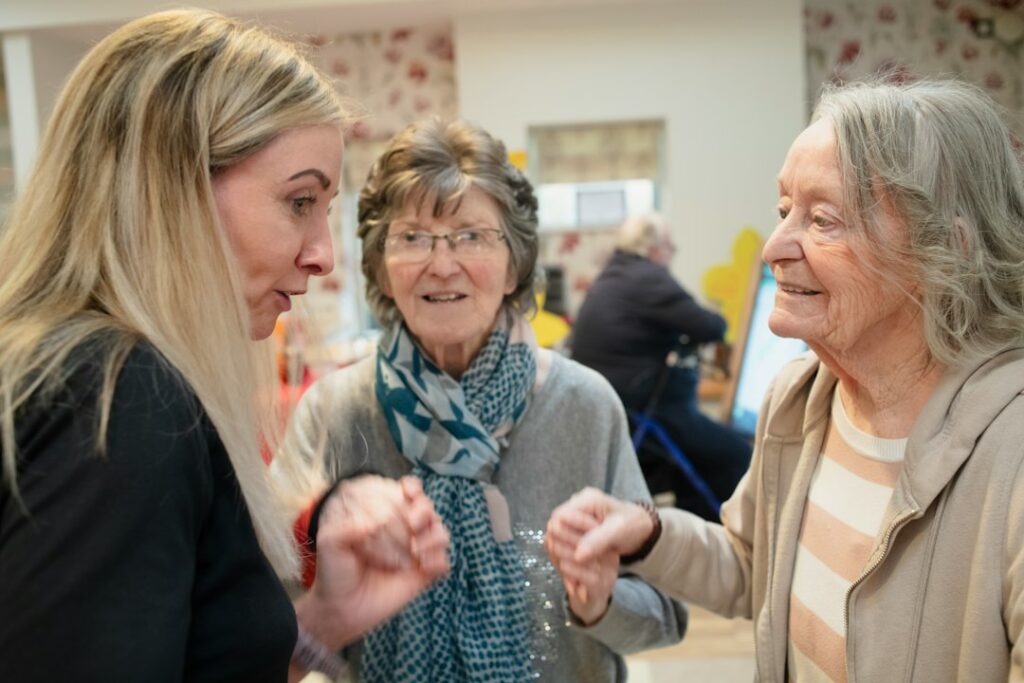
Moving into assisted living can change how families spend time together, but it does not have to weaken close relationships. Regular visits, familiar routines, thoughtful communication, and shared activities can help residents remain connected with the people who matter most.
For families in Bath, PA, seasonal weather, driving distance, work schedules, and changing family roles may affect how often visits happen. A connection plan that includes both in-person and remote contact can make relationships feel more consistent and natural.
How often should family members visit someone in assisted living?
There is no required number of visits that works for every resident. A predictable schedule is usually more helpful than occasional visits that are difficult to maintain.
Some residents prefer short visits several times a week, while others enjoy longer visits once a week. The right pattern depends on energy level, health needs, personality, transportation, and the resident’s daily routine.
Families can make visits easier by choosing a realistic schedule and communicating it clearly. For example:
- A family member visits on the same afternoon each week.
- Another relative calls on a regular evening.
- Grandchildren visit briefly after school or during a weekend activity.
- A family member checks in by video when travel is difficult.
Consistency can reduce uncertainty. If a visit must be canceled, a phone call, note, or rescheduled time can help the resident understand that the relationship remains important.
What are meaningful things to do during a visit?
The most meaningful visits do not always involve elaborate activities. Many residents value ordinary conversation and familiar companionship more than carefully planned entertainment.
Useful visit ideas include:
- Looking through family photographs and asking about the people or places shown
- Listening to favorite music
- Reading a newspaper, magazine, book, or religious text aloud
- Sharing a snack or beverage, if permitted by the resident’s care plan
- Taking a short walk in a safe area
- Folding laundry, organizing cards, or completing another simple task together
- Watching a familiar program
- Celebrating birthdays, anniversaries, and seasonal traditions
- Bringing drawings, letters, or updates from children and grandchildren
Visitors should pay attention to signs of fatigue. A resident may enjoy seeing family but become tired after an hour, especially if conversation is demanding or the environment is noisy. A shorter, comfortable visit may be more successful than staying longer.
How can families stay connected when they cannot visit often?
Phone calls, video calls, letters, and recorded messages can help maintain a sense of closeness between visits. These methods work best when they fit the resident’s abilities and preferences.
A simple phone call may be enough for a resident who enjoys conversation. Video calls can be useful when seeing facial expressions matters, but they may be frustrating if the resident has hearing, vision, memory, or technology difficulties.
To make remote contact easier:
- Use the same device and calling method whenever possible.
- Keep the device charged and positioned at eye level.
- Reduce background noise.
- Speak clearly and allow extra time for responses.
- Keep calls reasonably short if attention or stamina is limited.
- Send printed photographs, cards, or brief letters for residents who prefer something tangible.
- Record short greetings from family members for the resident to replay.
If a resident does not answer a call, that does not necessarily mean the resident is uninterested. The person may be participating in an activity, resting, receiving care, or simply having a difficult day. Trying again later is often more useful than treating one missed call as a personal rejection.
How can grandchildren and younger relatives participate?
Children may feel uncertain about visiting an assisted living community. They may worry that a relative looks different, moves more slowly, or has trouble remembering names. Simple preparation can make visits more comfortable.
Explain in age-appropriate language what the child may see and hear. Encourage children to bring something to share, such as a drawing, school project, short story, puzzle, or favorite song. The activity gives the visit a natural focus and reduces pressure to carry a long conversation.
Younger relatives can also stay connected through:
- Sending voice messages
- Sharing photographs of school, hobbies, or family activities
- Asking the resident to teach a card game or family recipe
- Recording a birthday greeting
- Creating seasonal crafts together
- Asking questions about childhood, work, holidays, or family history

Residents do not need to remember every detail of a visit for it to have value. A warm interaction can still provide comfort even when memory later becomes unclear.
What if memory loss makes conversation difficult?
Memory loss can change how families communicate, but it does not eliminate the need for connection. Conversations often work better when they focus on feelings, familiar subjects, and the present moment rather than testing memory.
Instead of asking, “Do you remember who I am?” a visitor might say, “It is good to see you,” or “I brought the photographs from the garden.” Open-ended questions can also be adjusted. Asking, “Would you like to listen to music or look at pictures?” may be easier than asking what the resident wants to do.
Helpful approaches include:
- Avoiding arguments about dates, names, or past events
- Responding calmly when the resident repeats a question
- Using familiar music, photographs, scents, or objects
- Speaking one-on-one rather than in a crowded group
- Allowing pauses without rushing to fill them
- Focusing on comfort and emotional connection instead of perfect recall
If a resident becomes distressed, the visitor can change the subject, lower stimulation, offer reassurance, or end the visit gently.
How can families respect the resident’s independence?
Staying connected should not mean taking over every decision. Residents generally benefit when family members ask before rearranging belongings, sharing personal information, bringing food, or inviting other visitors.
A resident may also prefer different kinds of contact than family members expect. Someone who dislikes frequent phone calls may enjoy letters. Another person may prefer group visits, while someone else feels more comfortable with one visitor at a time.
Family members can ask direct questions:
- What kind of visits feel most comfortable?
- Is there a preferred time of day?
- Would you rather talk, walk, listen to music, or sit quietly?
- Who would you like to receive updates?
- Are there activities or topics you would rather avoid?
Preferences may change over time. Health changes, hearing difficulties, winter weather, and changes in mood can all affect how a resident wants to connect.
How should families handle winter weather and travel concerns?
Seasonal conditions can affect visits in Bath, especially during periods of snow, ice, cold temperatures, or reduced daylight. Safety should take priority over keeping a particular visit date.
Families can prepare backup plans before winter arrives. A canceled drive can be replaced with a phone call, video visit, letter, or recorded message. Visitors should also consider whether the resident is comfortable going outdoors or whether an indoor activity is more suitable.
Clear communication helps prevent disappointment. If travel may be difficult, families can discuss alternate dates and contact methods in advance rather than waiting until the last minute.
What should family members do if the resident seems withdrawn?
A resident who appears less talkative or less interested in visits may be tired, uncomfortable, depressed, experiencing hearing difficulty, or adjusting to a change in health. Withdrawal should not automatically be interpreted as rejection.
Family members can gently ask how the resident is feeling and share observations with appropriate care staff when there is a noticeable or persistent change. Staff may be able to identify whether the resident is missing meals, sleeping poorly, having difficulty hearing, or experiencing another concern.
Connection is often built through repeated, low-pressure contact. Sitting quietly, sharing music, sending a note, or returning at another time may be more helpful than insisting on a long conversation. The goal is not to make every visit cheerful; it is to remain present, respectful, and dependable.
